
Blog post
Secrets of Your Science Textbook: The Tale of Pluto
30 Jul 2026
 By Joseph Berman
Editorial Director for Science
KnowledgeWorks Global Ltd.
Key takeaways
- Pluto was reclassified from the ninth planet to a dwarf planet on August 24, 2006, when the International Astronomical Union (IAU) adopted a new definition of “planet.”
- The post explains how this unusual scientific change reached K-12 textbooks within about a month, showing that widely understood, high-profile stories can accelerate the adoption of new scientific knowledge.
Why is science so powerful? The authors of science textbooks love to answer this question. In opening chapters or prologues, authors often explain that the laws and theories of science are testable and have passed those tests, over and over again. If new evidence ever arises that fails to support an existing paradigm, then scientists would be charged with revising or replacing their ideas as necessary. No precept of science is granted immunity.
However, there’s a catch: revising science takes time. Sometimes a few years, sometimes much longer. Only after a thorough vetting, both formal and informal, will a radically new idea gain widespread acceptance. Admission into science textbooks is, arguably, the last step of the process.
One example of this long process is Linnaean taxonomy. This is the time-honored method of classifying organisms into hierarchical groups—domain, kingdom, phylum, class, and so on down to genus and species. Yet among the experts, taxonomy has been overhauled by cladistics, a new system based entirely on evolutionary relationships. If cladistics isn’t discussed in your current biology textbook, wait for the next edition—or perhaps the edition after that. The development of cladistics dates back to 1957, if not earlier. Its publicizing doesn’t seem to have much urgency.
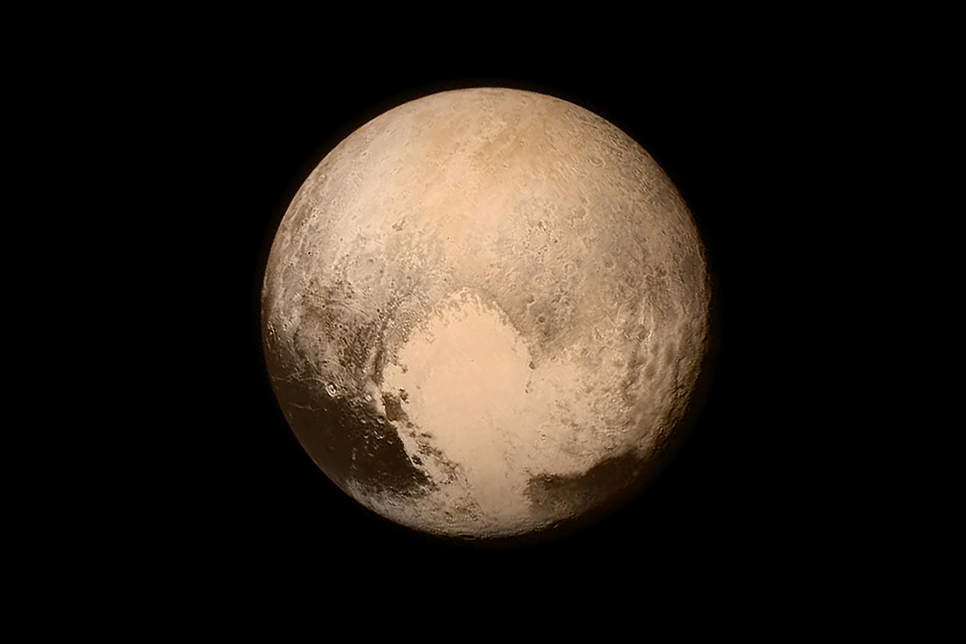
So, here’s a question to consider: has a bedrock lesson in K-12 science ever changed extremely quickly, in a manner of days or weeks instead of years and decades? The answer is yes: one example is the reclassification of Pluto—formerly the ninth planet, now recognized as a dwarf planet.
Pluto first came to human attention in 1930, when astronomer Clyde Tombaugh discovered it. Ever since, students everywhere learned about Pluto and its many eccentricities:
- Pluto is small and rocky, making it more like an inner planet than an outer one.
- Pluto’s orbit is both tilted and stretched, occasionally bringing it inside the orbit of Neptune.
- Pluto has a moon, Charon, that is nearly Pluto’s twin.
By the 2000s, however, Pluto’s status was becoming a little shaky. Turns out that the ninth planet wasn’t such an oddball after all. Astronomers had discovered a number of rocky objects in the distant reaches of the solar system, and some of the objects had Pluto-like size and mass. Some basic questions were proving difficult to answer. Should all these new objects be called planets? If so, then how many planets are there? What is a planet anyway?
Resolution arrived on August 24, 2006, when the International Astronomical Union (IAU) voted to “decommission” Pluto as a planet—as one commentator put it. Instead, the IAU classified Pluto and similar bodies into a new category: the dwarf planets.
The timing of this announcement had the side effect of disrupting the lives of science textbook developers. At the time, my colleagues and I at a publisher had just completed a new edition of our program for the state of California, and the state textbook commission was asking for Pluto revisions. Thus I was tasked with hunting down and updating all references to Pluto, incorporating a definition of the dwarf planets, and revising phrases such as “the nine planets” (now only eight) and “the five outer planets” (now only four.)
Somehow, we cranked out our revised, Pluto-accommodated California textbooks and other materials in about a month. Others did exactly the same.
So what made Pluto’s reclassification so special? Why did it receive instant accommodation in textbook-world, while other changes in science are kept waiting in the wings? I would like to propose a simple explanation:
Pluto makes an outstanding story.
Scientific proclamations are often gobbledy-gook to the lay person, but everyone could understand Pluto. Back in 2006, the media seized on the story and made it front-page news. The general public, not just the science-minded, were paying attention.
Like all great stories, the reclassification of Pluto had an empathetic lead character. That character was Pluto itself. A tiny, cold, and distant hunk of rock was plucking heartstrings. An editorial cartoon showed the bigger planets ganging up on Pluto. On my Facebook page, more than one friend posted the phrase “Poor Pluto!” Someone I know claimed the website Plutoforplanet.org.
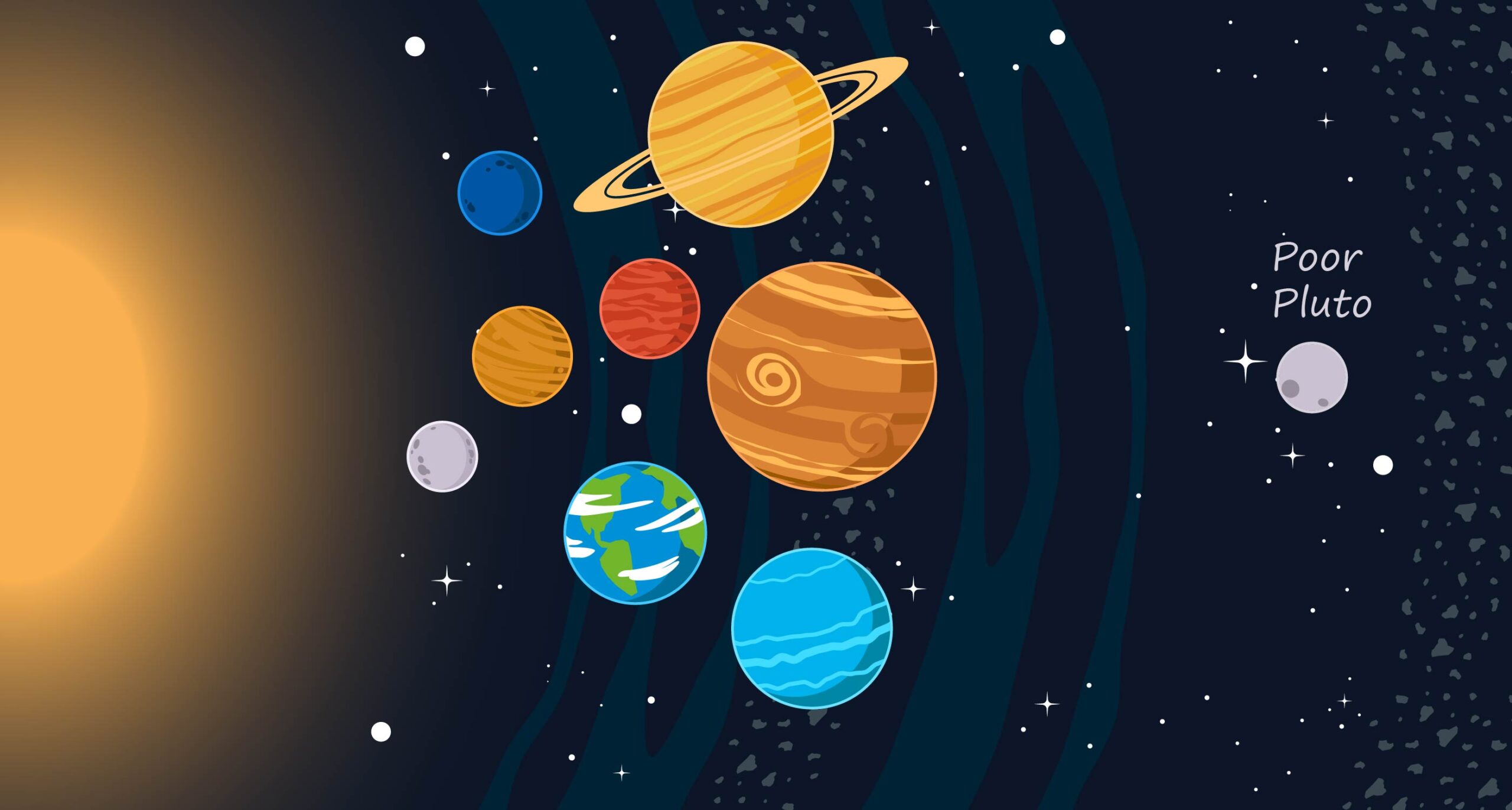
When the story finally died down and the dust settled, the reclassification of Pluto seemed permanent. Today, textbooks and other reference sources identify Pluto as a dwarf planet without much controversy or complaint.
What lesson can we learn? I think the comparison shows that science is, at its heart, a human endeavor. Yes, science is based on evidence and reasoning, but it’s also subject to human biases and foibles, human stubbornness and passions, and both logic and emotion, making science, at least in some ways, like any other field of study or way of experiencing the world.
At KGL, this is the kind of nuance our writers and editors navigate every day — across science, English language arts, social studies, mathematics, and beyond. Getting a story like Pluto’s right means understanding not just the science, but how and why it changes, and what that means for the students reading about it next.
Joseph has over 25 years of K–12 science and math product development experience. He edited high school science textbooks at Prentice Hall and served as Science Editor and later Editorial Director of Technology at Macmillan/McGraw Hill. At Scholastic, he developed math programs such as MATH 180. Joe oversees science development for KGL and can be reached at info@kwglobal.com.
Related Posts

Are We Ready to Work With Agents?

Reimagining the Journal Manuscript Submission Process