
Attention to these principles will help address some common challenges and mitigate key risks of a system migration.

This April, the Americans with Disabilities Act Title II regulations finally come into play. Here we look at what this means for publishers and the steps they might be taking to comply.

AI is shifting from tools to operating layers. KGL's Hong Zhou highlights what eight major trend reports reveal for the future of scholarly publishing and education.

At the start of each year KGL gathers its brightest minds and aims to second guess what will be the big themes in publishing of the year ahead.
In this post we look back at some of the most important Research Integrity touchpoints from 2025.
At this year’s ALPSP Conference, KGL’s Director of Consulting, Kevin Lomangino, chaired a candid discussion with three society publishing leaders, each of whom shared what they’ve tried, what they’ve learned, and how they are working to build more resilient and responsive journal programs for the future.
The role of the editor-in-chief is undergoing a profound transformation. For societies and publishers, selecting the right EIC is a critical step that can shape the trajectory of the journal and determine its future influence.
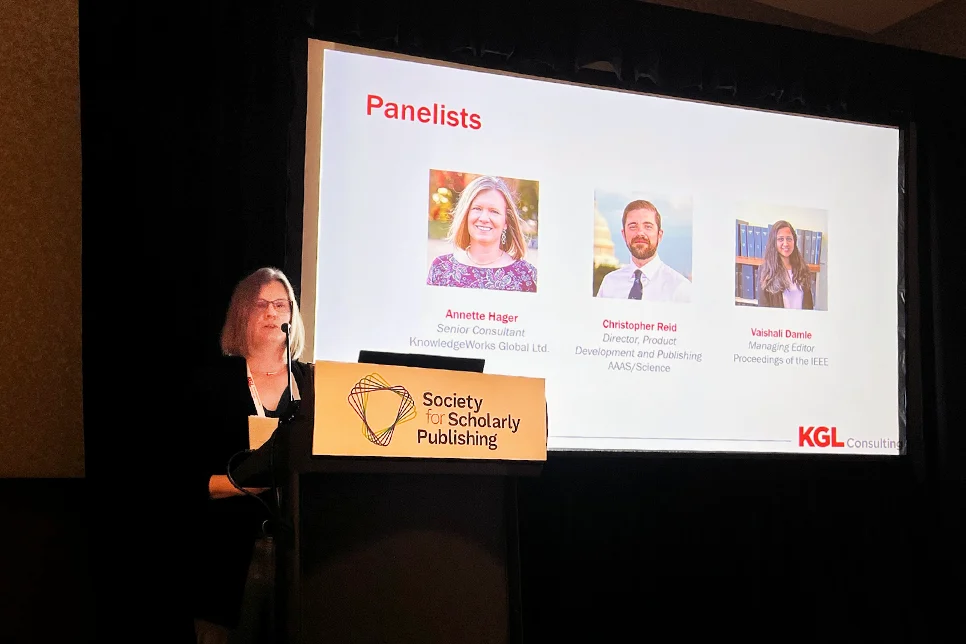
At this year’s SSP Annual Meeting, KGL’s industry breakout session highlighted the practical ways in which citation and bibliometric data can drive editorial strategies.
Ahead of the CSE 2024 Annual Meeting, KGL highlights a session in which we are proud to take part, “Evolving Roles and Relationships for a Sustainable Publishing Ecosystem."