

Blog post
Time Is Leverage in Society – Publisher Contracts: Why Your Renewal or RFP Schedule Matters More Than You Think
22 Jan 2026


By Jennifer Kullgren, Senior Consultant

When it’s time to renew a major publisher contract, most societies focus on the obvious question: What offer can we get? But there’s a more foundational question that quietly determines how strong that offer can be:
“How much time do we have to make a real choice?”
In negotiations, time is leverage. The longer your runway, the more credible your alternatives, the more competitive pressure you can maintain, and the more likely you are to secure terms that truly reflect the value of your program.
The renewal clock is your negotiating power
A society’s strongest negotiating position is simple: the ability to walk away, or at least to credibly prepare to do so.
That credibility comes from timing. If a publisher or vendor believes you can’t realistically complete an RFP, negotiate a new deal, and transition in time, they have less incentive to compromise.
And the uncomfortable truth is that renewal windows are often tighter than they look. Publisher contract negotiations alone can take months, and transitions can take close to a year in many cases.
Step one: check your publisher contract earlier than feels necessary
Before you think about an RFP, check your current agreement for the dates and clauses that quietly set your “real” timeline, especially:
- Termination date, and how it’s defined
- Notice of termination, often 12 months and sometimes longer
- Auto-renewal language, including what happens if you miss notice
- Any restrictions on soliciting bids, an incumbent’s right of first refusal, or right to match competing offers
These are more than administrative details. They determine whether you have real options, or whether you’re negotiating against a deadline.
Build a runway that keeps your options open
KGL Consulting recommends reserving 24 months before publisher contract termination to gather information, run an RFP if needed, negotiate, and preserve the option to transition.
Why so much time? Because a competitive option isn’t credible unless you can actually execute it. Transition planning commonly requires 9 to 12 months, and contract negotiations can take 3 to 4 months, or longer, depending on complexity and how quickly drafts move back and forth.
This is why an 18-month runway can feel comfortable on paper and still leave you squeezed in reality. Figure 1 provides a rough guideline for timing assuming a 24-month window.
With sufficient time, you can:
- Pressure-test your incumbent’s best and final offer early, while an RFP is still feasible
- Evaluate stakeholder wish lists and prioritize the most important criteria – whether it’s financial return, editorial support, technical capabilities, or performance commitments
- Hold back lower-impact items until you’ve secured movement on the few terms that define the relationship
Without time, everything becomes reactive. You end up accepting standard positions because you’re negotiating under deadline, and deadlines reward the party with less to lose.
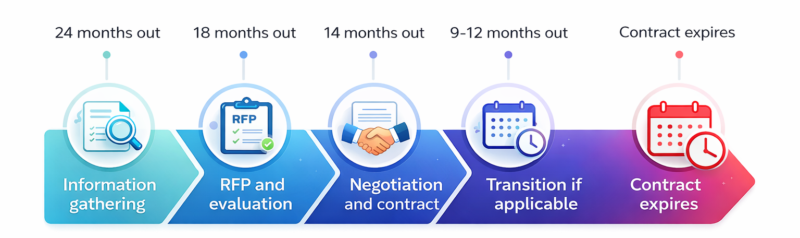
Figure 1. High-level guideline for publisher RFP timing – circumstances often dictate a more customized schedule.
The takeaway
Timing is what turns a renewal from a conversation into a negotiation.
Start early enough that alternatives remain real. Maintain competitive pressure long enough to matter, so you’re shaping the deal rather than reacting to it.
The society’s greatest advantage in a renewal process is time.
KGL Consulting can help
KGL Consulting has spent more than two decades helping societies run publisher RFPs and negotiate publisher contract renewals with confidence and with leverage. We’ve worked with all major publishers and have led hundreds of RFPs, renewals, and negotiations, bringing sharp financial analysis, market insight, and hard-won experience about where publishers can and can’t flex.
No matter how much runway you have, we’ll adapt to your situation. If there’s time, we can help you build a thoughtful timeline that keeps multiple options on the table. If the window is short, we’ll focus on the most practical path, one that addresses immediate concerns while protecting your society’s longer-term priorities. That might mean pursuing the best renewal available now, while also putting a plan (and contract structure) in place that positions you for a more competitive process and stronger negotiating footing in the next term.
If your society is approaching a renewal window or wants to build a timeline that keeps options real, reach out to learn how we can assist with planning, executing an effective RFP, and negotiating the strongest possible agreement.
Learn more about KGL Consulting services or contact us at info@kwglobal.com to set up a complimentary consultation.
Related Posts

Take a Moment: Guided Breathing for Workplace Well-Being

The Year in Research Integrity: A Retrospective on How Trust and Transparency Set the Agenda for Academic Publishing
