
Over the last decade, in response to a changing, better-informed world, the publishing industry has taken steps to bring more diversity into the workforce as well as to make its content more inclusive.
Looking to the year ahead once again, the KGL experts across book and journal publishing, scholarly and education markets, technology and business development, weigh in to highlight some of the industry trends we expect will be prominent in 2023.
There is no question that technology, particularly in the last two years, has played a large role in the field of education. With remote learning, students and educators were required to become not only familiar but fluent in EdTech.
Columbia University Press (CUP) advances knowledge about our world through essential writing and research focusing on the global, the urban, and the contemporary.
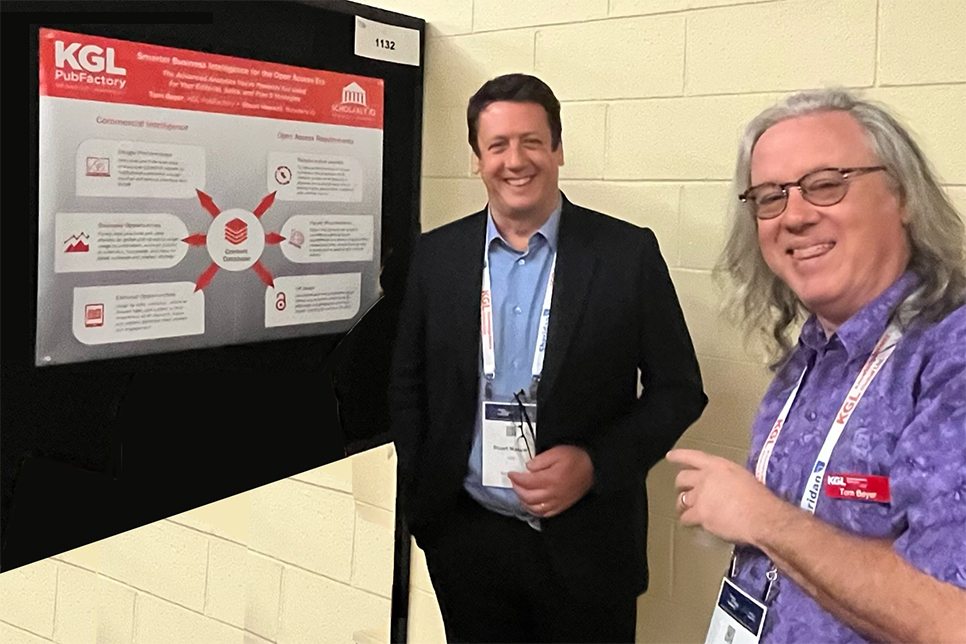
Recently at the Society for Scholarly Publishing Annual Meeting, KGL PubFactory’s Director of Platform Services, Tom Beyer, together with longtime platform partner, Stuart Maxwell, COO of Scholarly iQ, presented a poster on the advanced analytics available to publishers that many are still not using for their editorial, sales, and Plan S strategies.
NIMAS (National Instructional Materials Accessibility Standard) is a US technical standard used by publishers to produce XML that is used to develop specialized formats for students with print disabilities.
The global publishing industry has always had a conflicted relationship with the environment.
“If it doesn’t come bursting out of you in spite of everything, don’t do it,” wrote Charles Bukowski in his poem “So you want to be a writer?” Being an author isn’t easy.
KGL is introducing an occasional series of explorations into the current issues in K-12 and higher education, where we will spotlight the varying perspectives of teachers, students, education publishers, and other stakeholders in the learning life cycle.